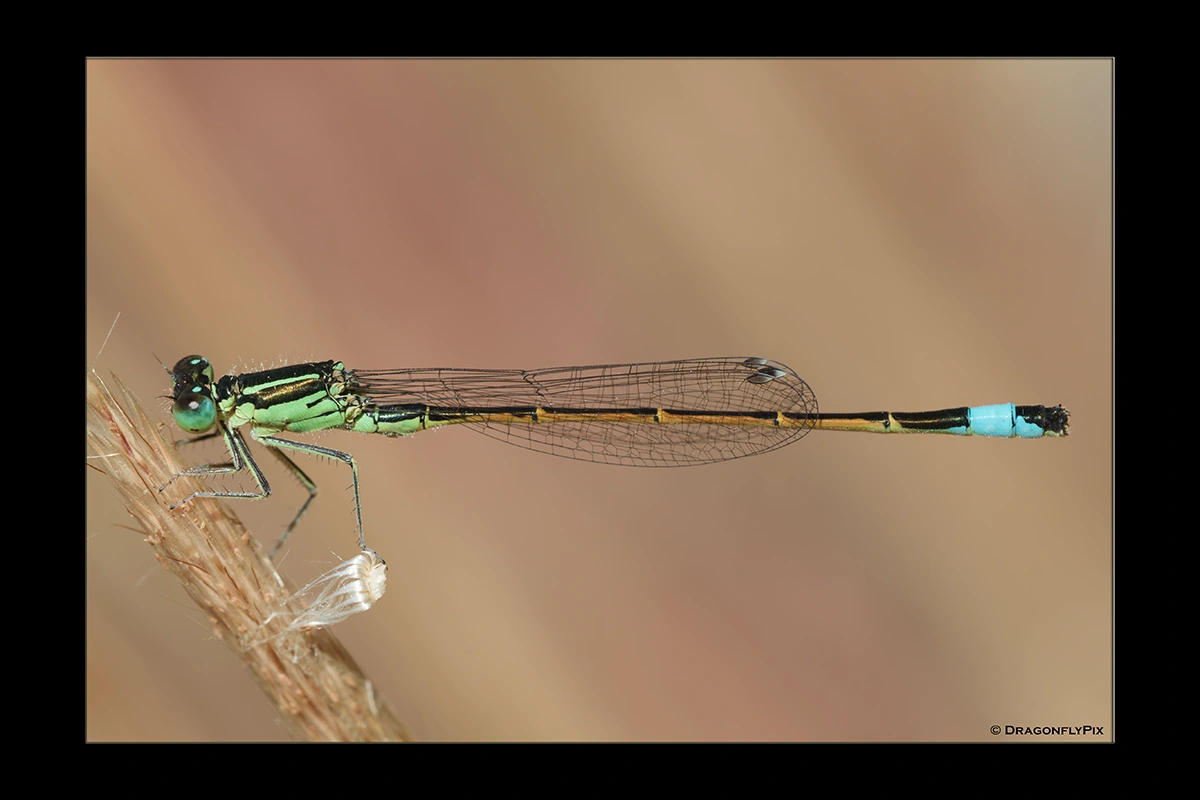
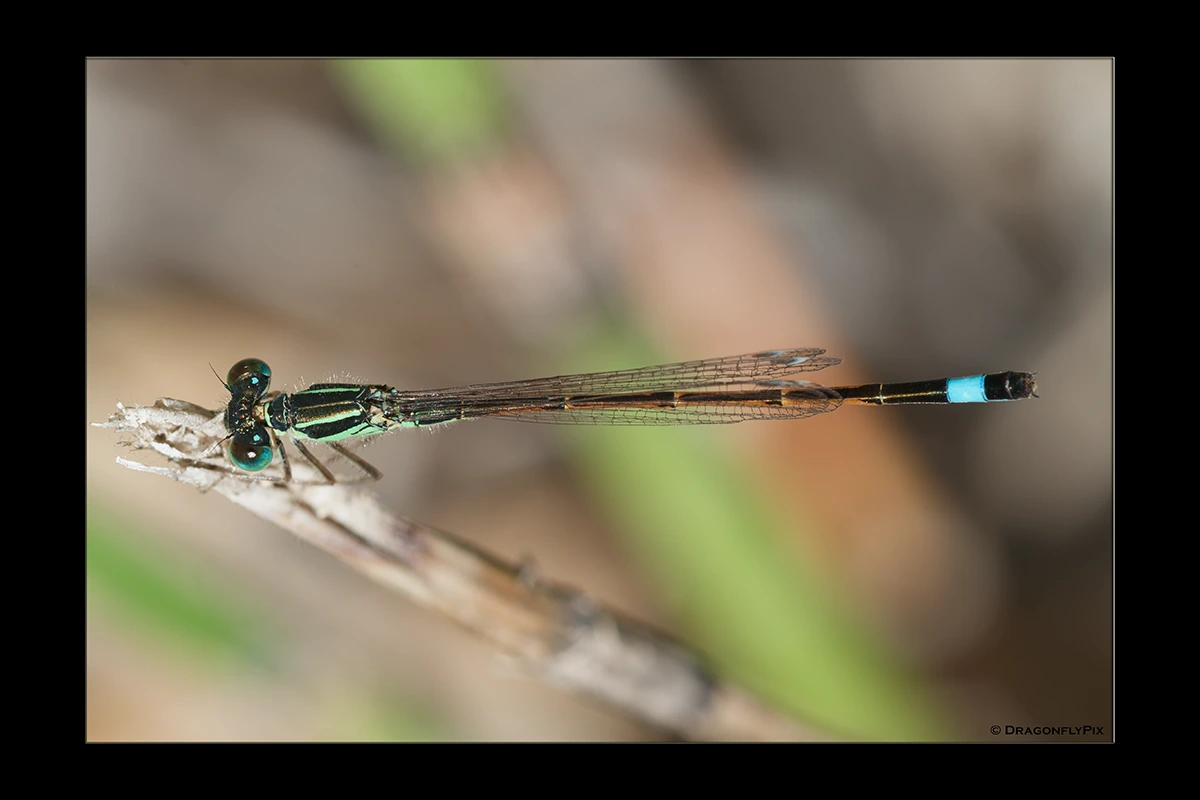
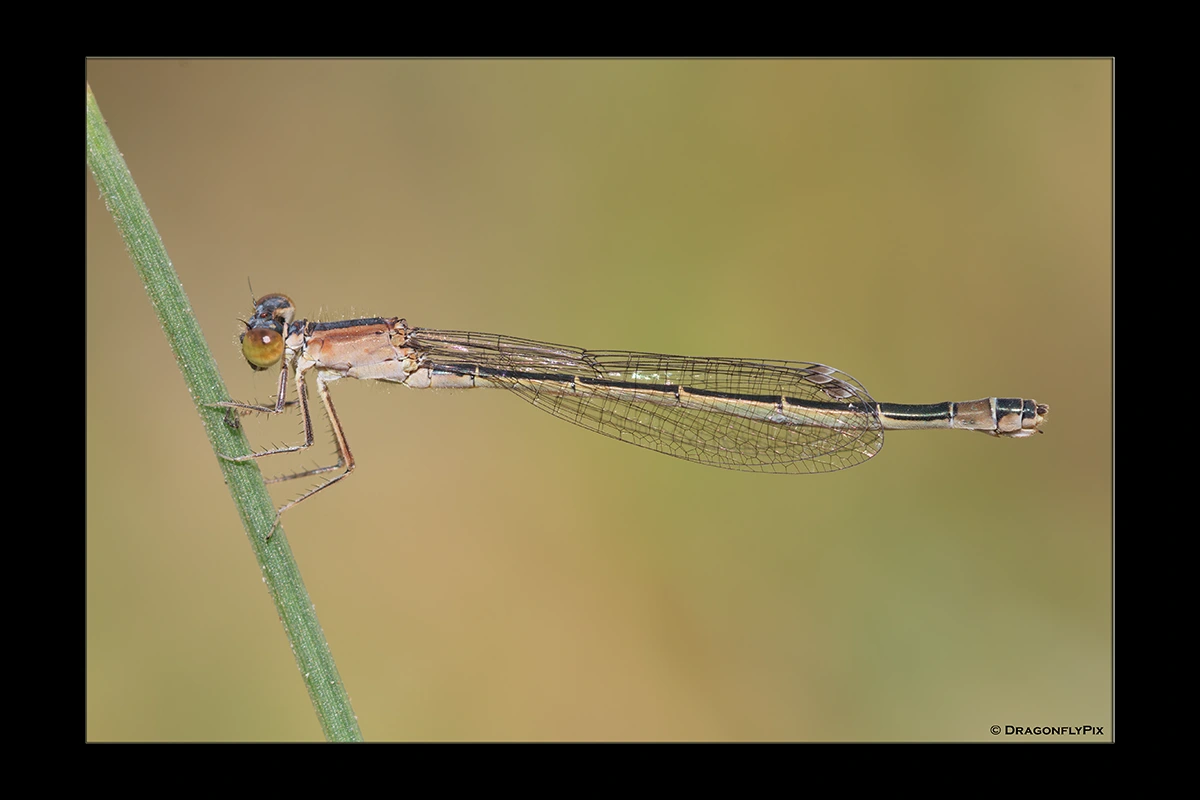
Sahara Bluetail (Ischnura saharensis)
• English name: Sahara Bluetail
• German name: Sahara-Pechlibelle
• French name: N/A
• Dutch name: Saharalantaarntje
• Swedish name: N/A
• Norwegian name: N/A
• Finnish name: N/A
• Danish name: N/A
• Italian name: N/A
• Czech name: N/A
• Slovenian name: N/A
• Bulgarian name: N/A
Sahara Bluetail
(Ischnura saharensis)

Map data based on J.-P. Boudot & V. J. Kalkman (eds.),
Atlas of the European Dragonflies and Damselflies
| General | ➤ a small species, very similar to I. elegans, which in Europe occurs only on the Canary Islands | |
| Classification | • suborder: Zygoptera (damselflies); family: Coenagrionidae | |
| Conservation status | • IUCN Red List Europe: Least Concern | |
| Scientific name | • Ischnura saharensis Aguesse, 1958 | |
| Name genus | • Ischnura: from Grk. ἰσχνός = thin, slender +; οὐρά = tail ⇒ for the slender abdomen (compared to e.g. Calopteryx species) | |
| Name species | • saharensis: after the Sahara desert | |
| Distribution | • click or tap the Map button above | |
| Habitat | • any still or slow-flowing water with a rich vegetation | |
| Dimensions | • typical body length: 26-31 mm; hindwing: 12-17 mm | |
| Notes | • belongs to the elegans group, together with I. elegans, I. genei and I. graellsii | |
| • not known to co-occur in Europe with I. elegans, I. genei or I. graellsii, but may co-occur with I. senegalensis on the Canary Islands | ||
| • violacea and rufescens are immature female colour forms, which with age develop into one of the three mature forms: violacea (with its antehumeral stripe) into either typica or infuscans; rufescens (without an antehumeral stripe) into infuscans-obsoleta; see below for details | ||
| Both sexes | Wings | • the pterostigma in the forewing is the same size as that in the hindwing |
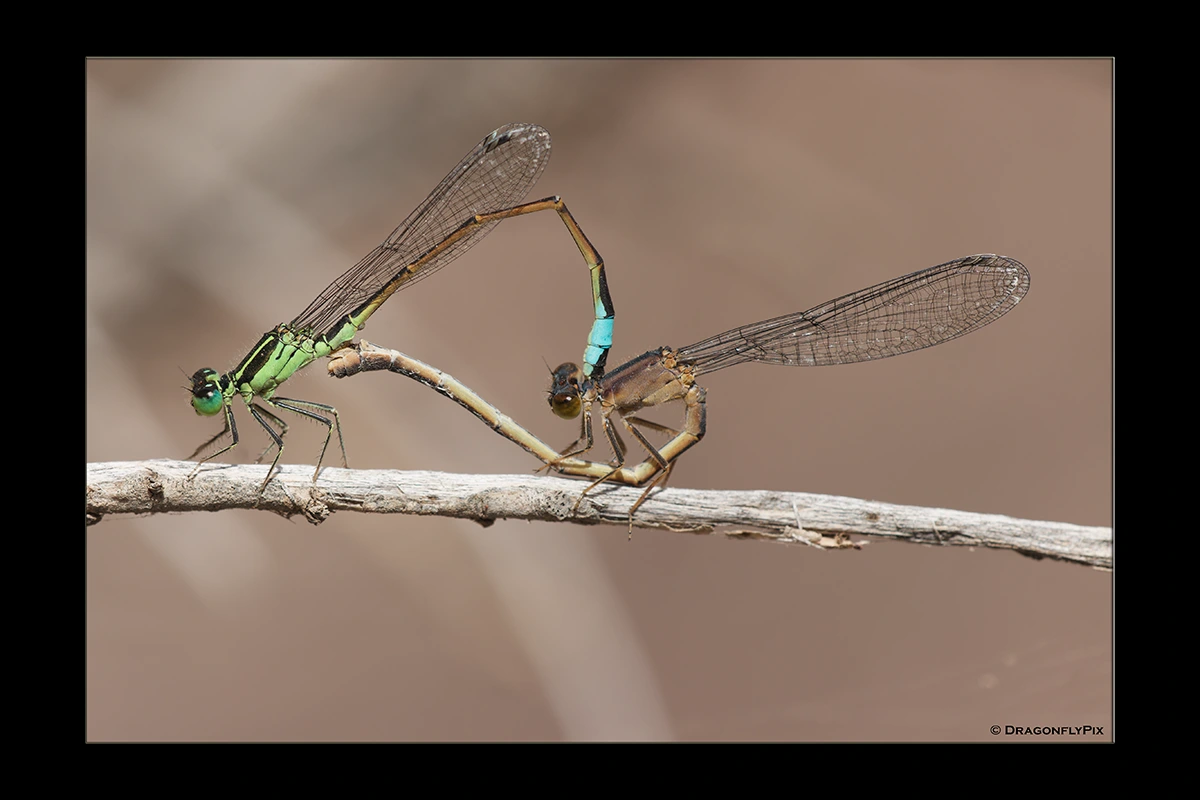
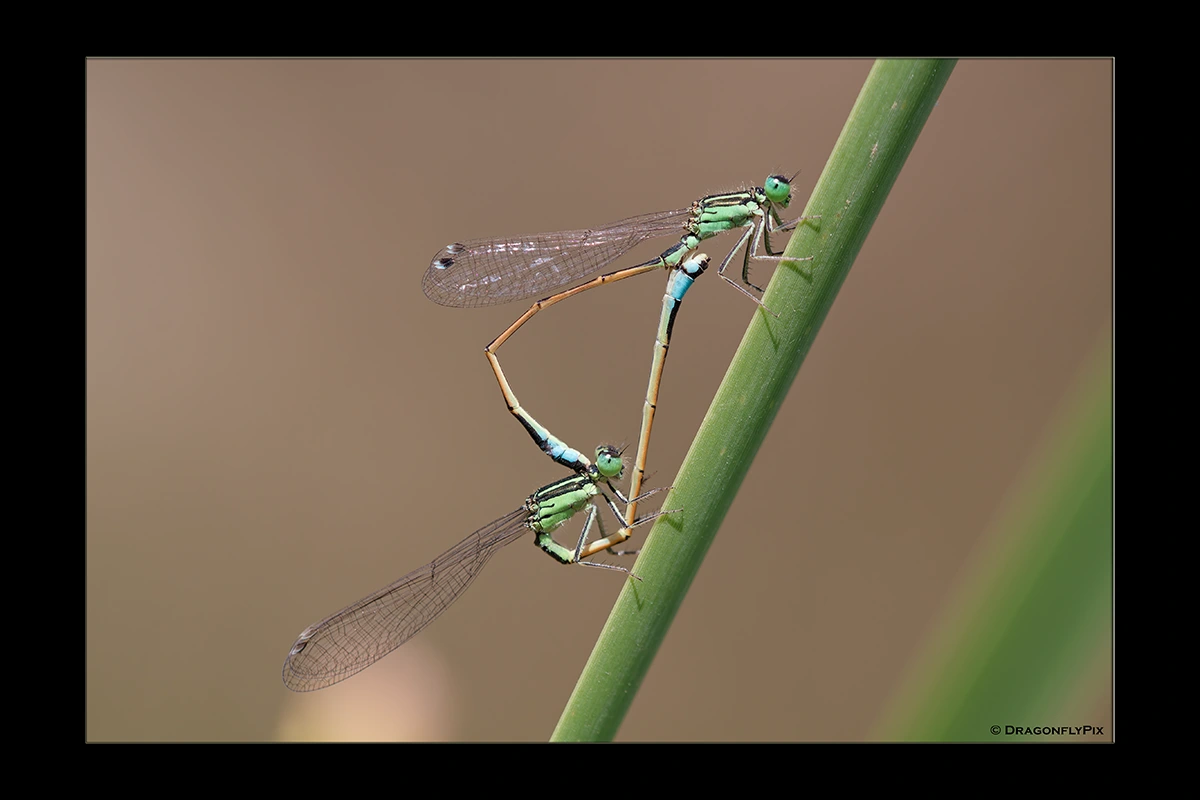
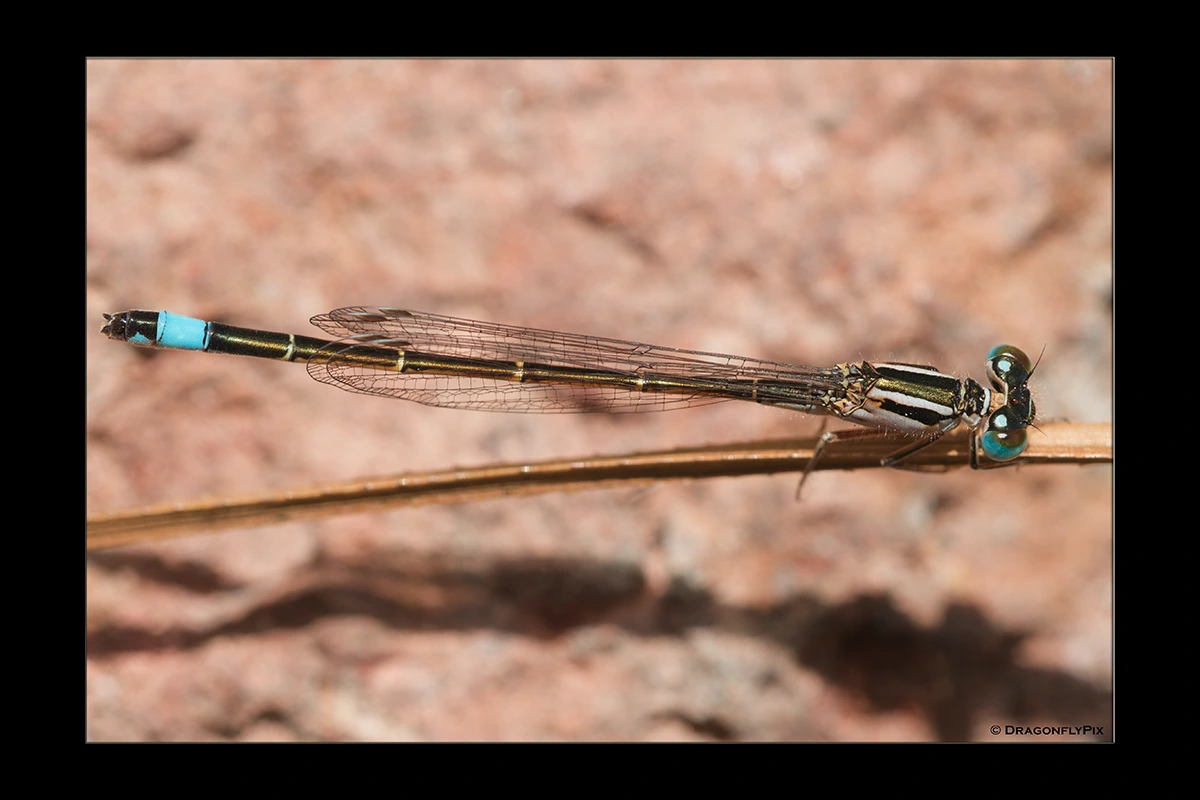
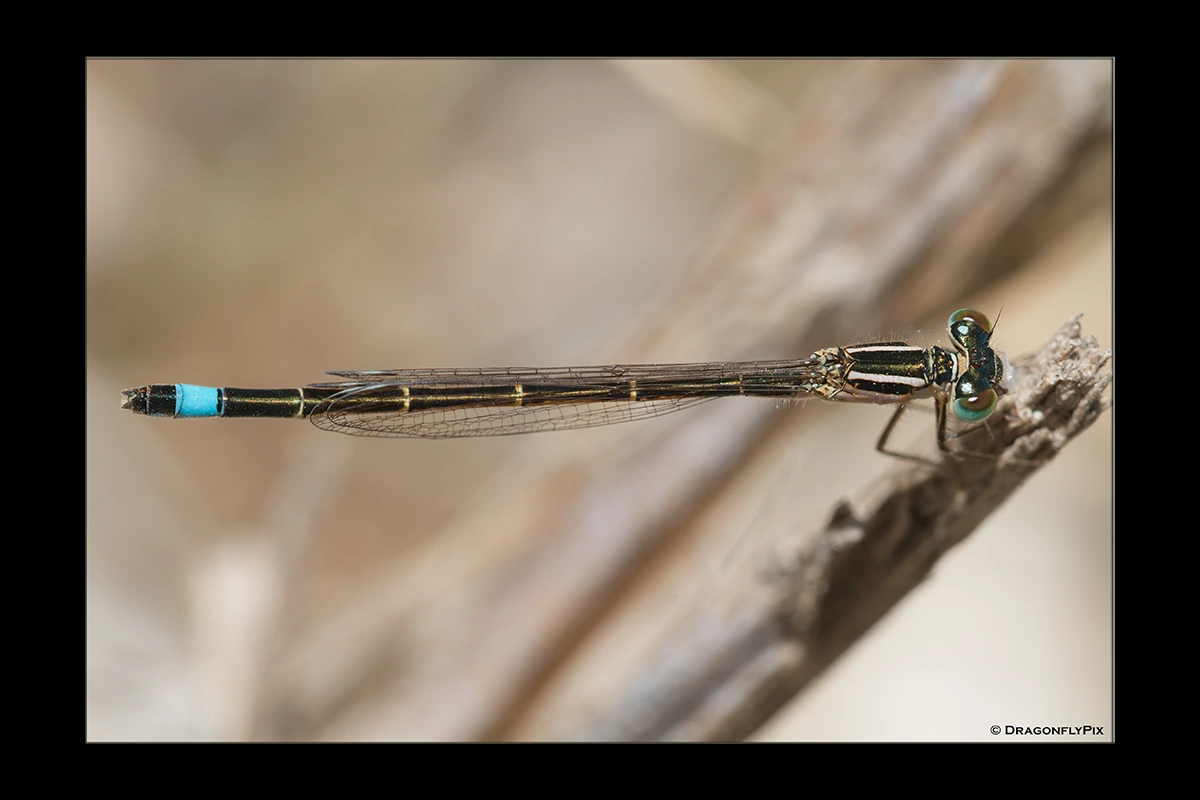
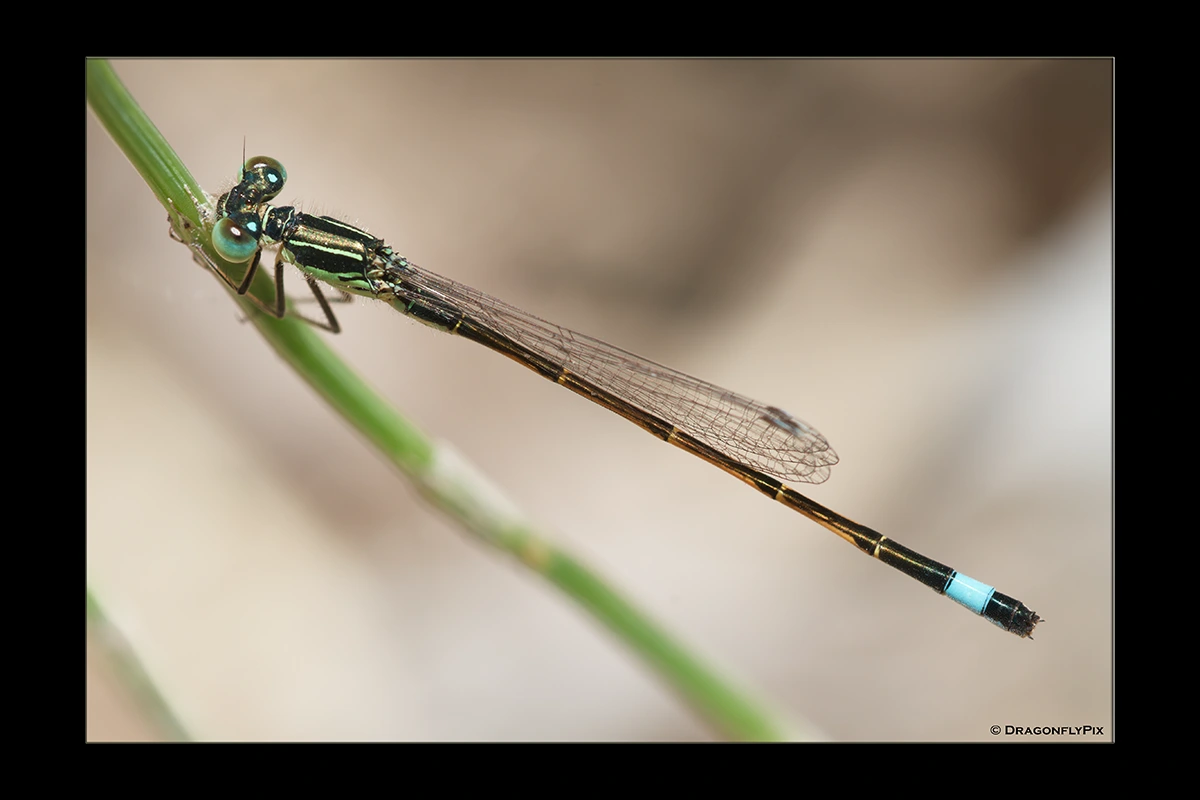
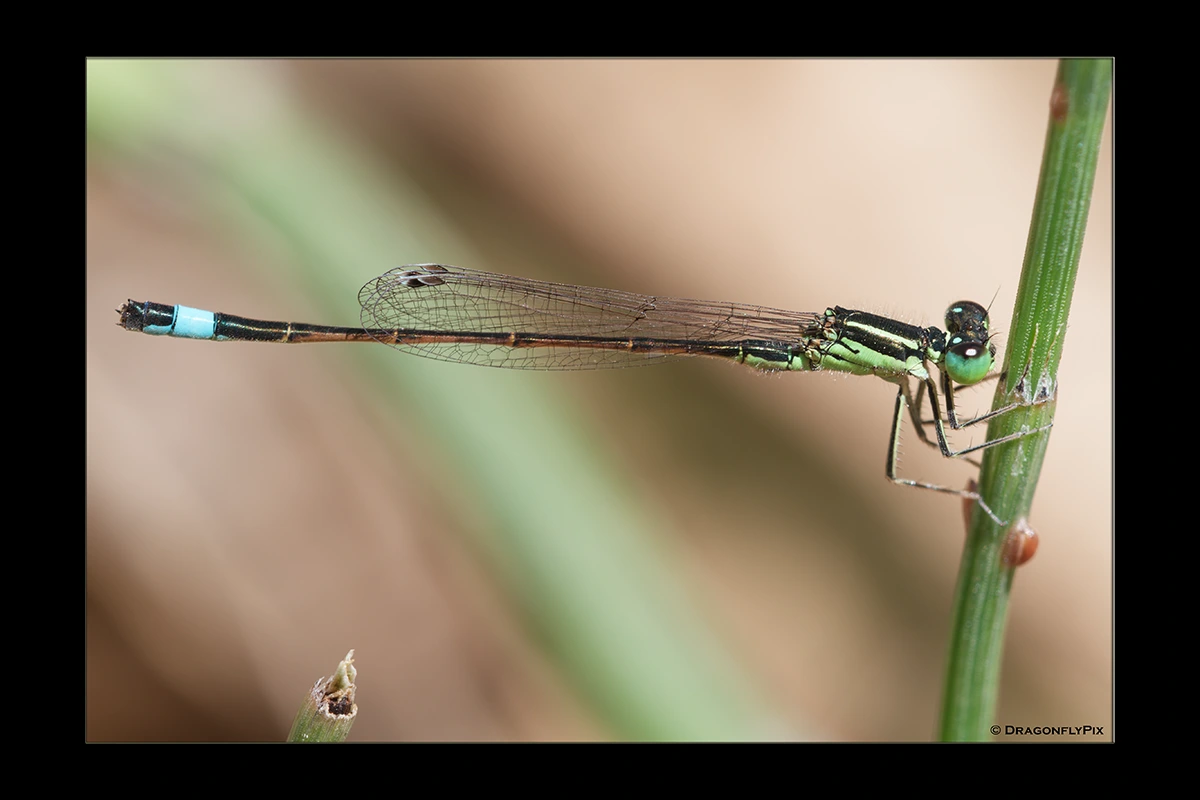
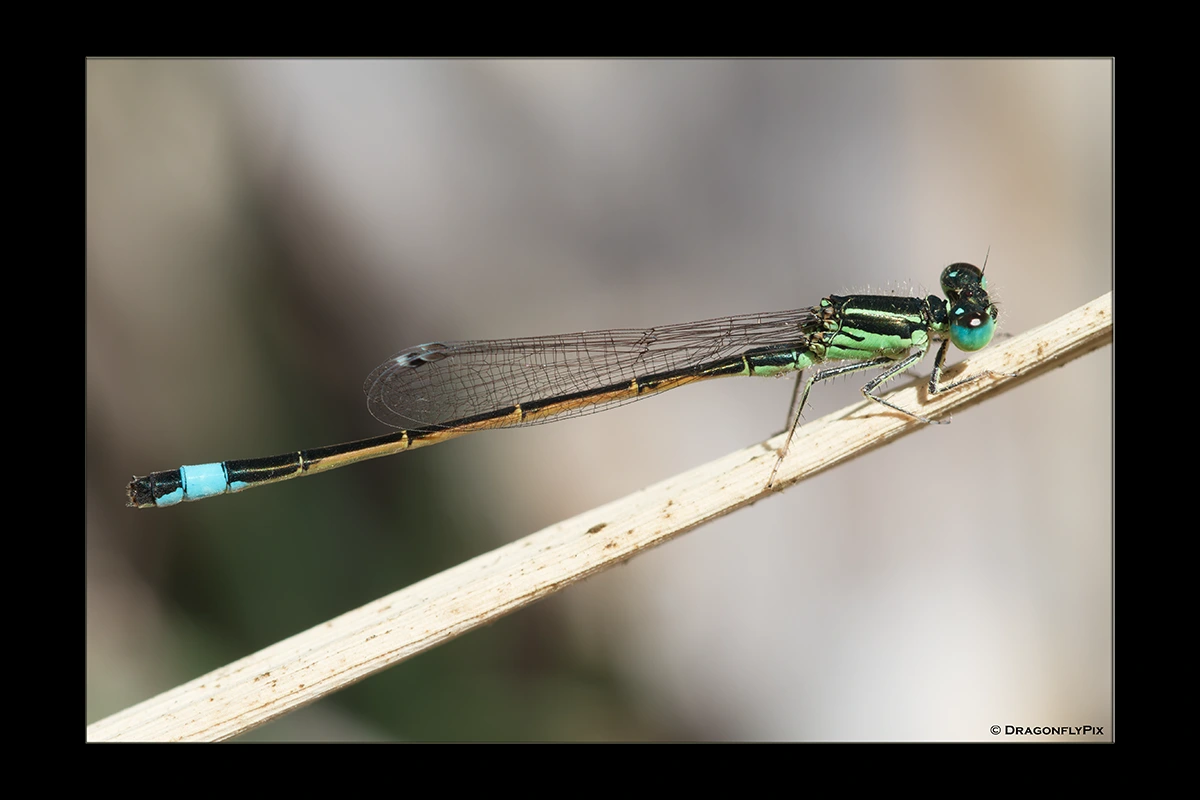
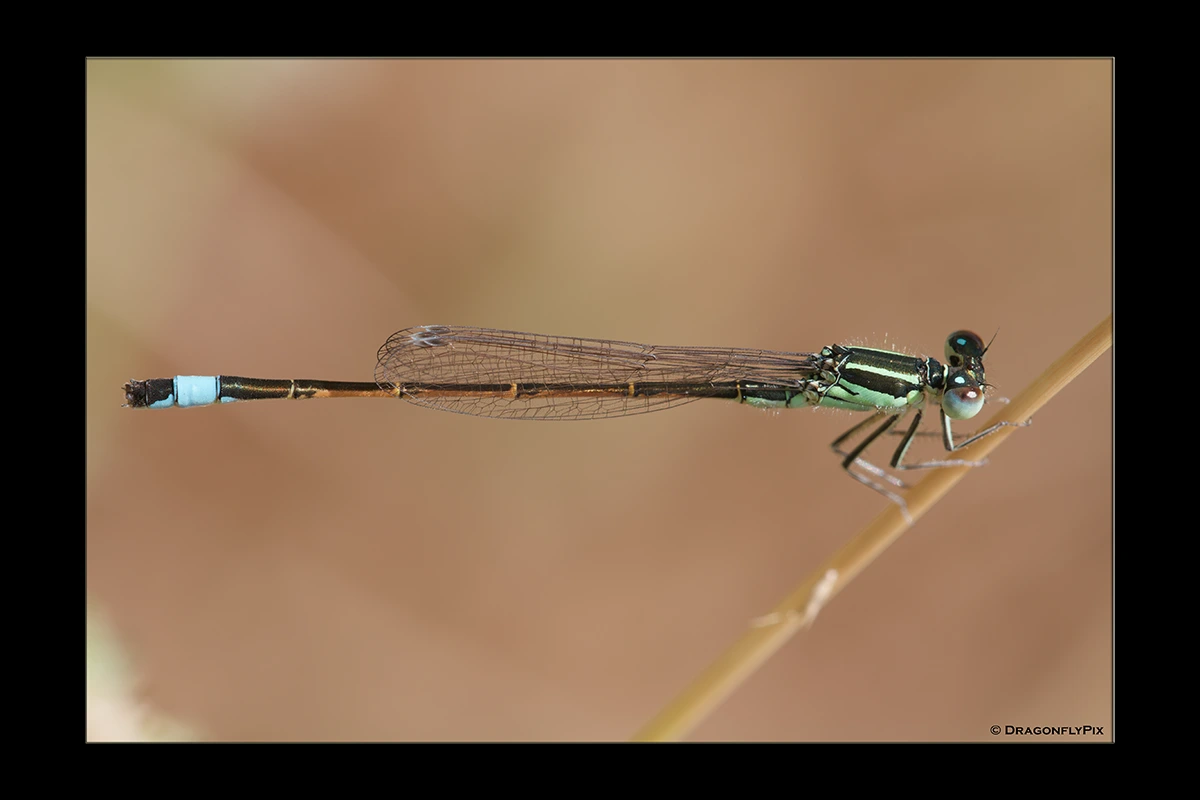
| Male | Thorax | • the lower side of the thorax and the antehumeral stripe (which may be narrow or even absent) are green |
| ➤ the pronotum does not bear a dark upright projection | ||
| • compared to I. senegalensis the black line on the interpleural suture tends to be much thicker, longer and more clearly visible | ||
| Abdomen | • the abdomen is black on top, but S8 is sky blue | |
| ➤ the black upper part of S2 is separated from the green lower part in a straight line | ||
| • compared to I. senegalensis the tubercle on S10 is much larger and more clearly visible | ||
| Wings | • the pterostigma in the forewing is bicoloured: black on the inside, white on the outside; the pterostigma in the hindwing is uniformly beige/brown | |
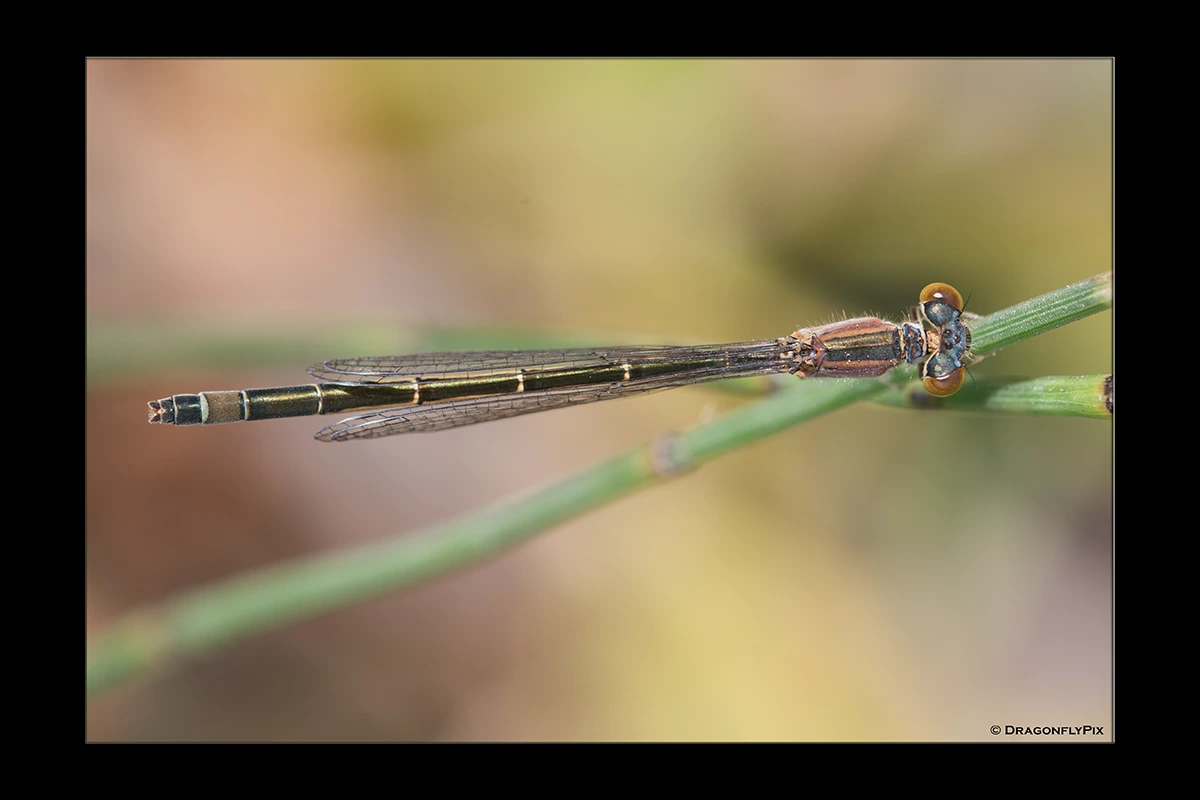
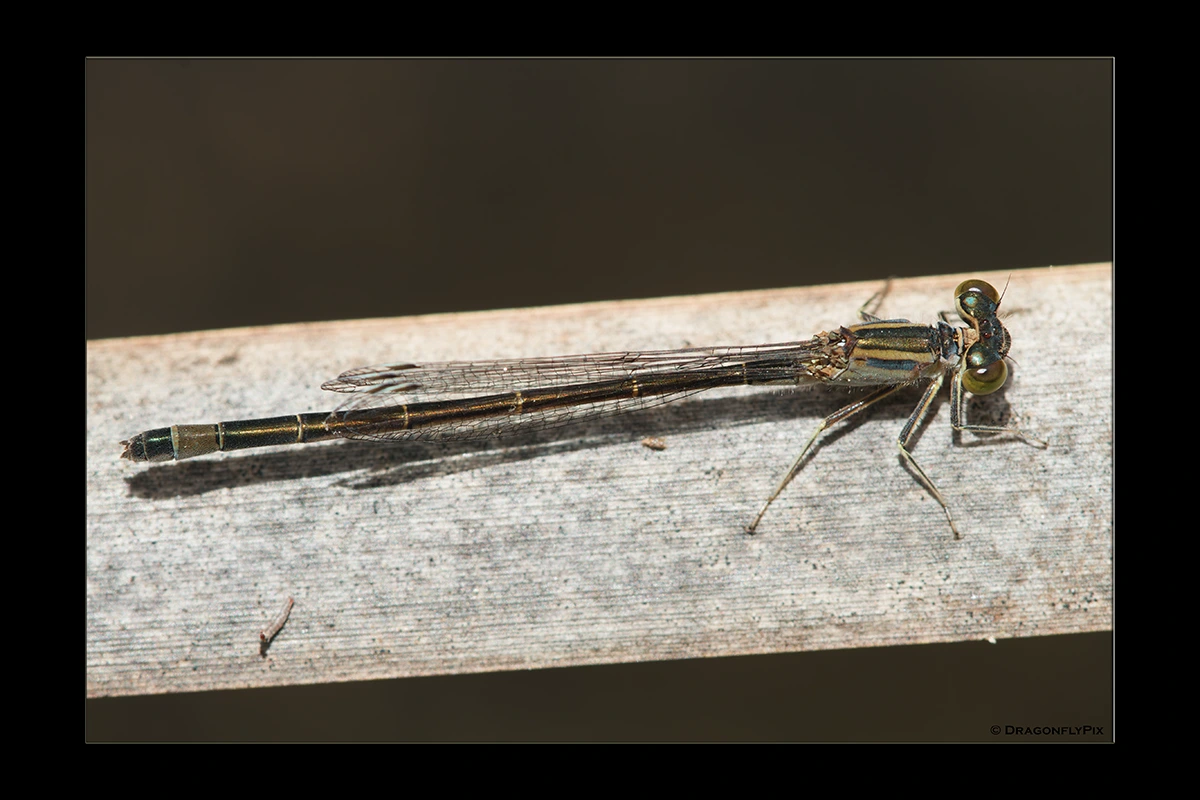
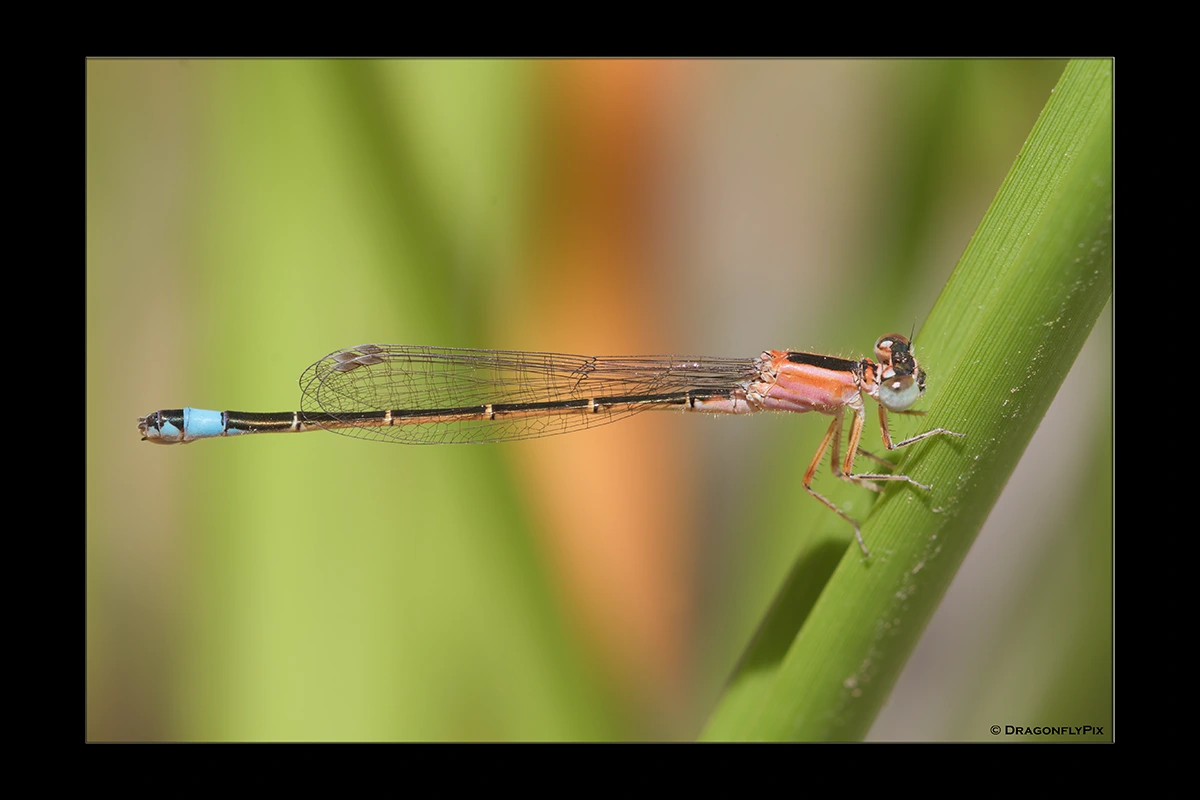
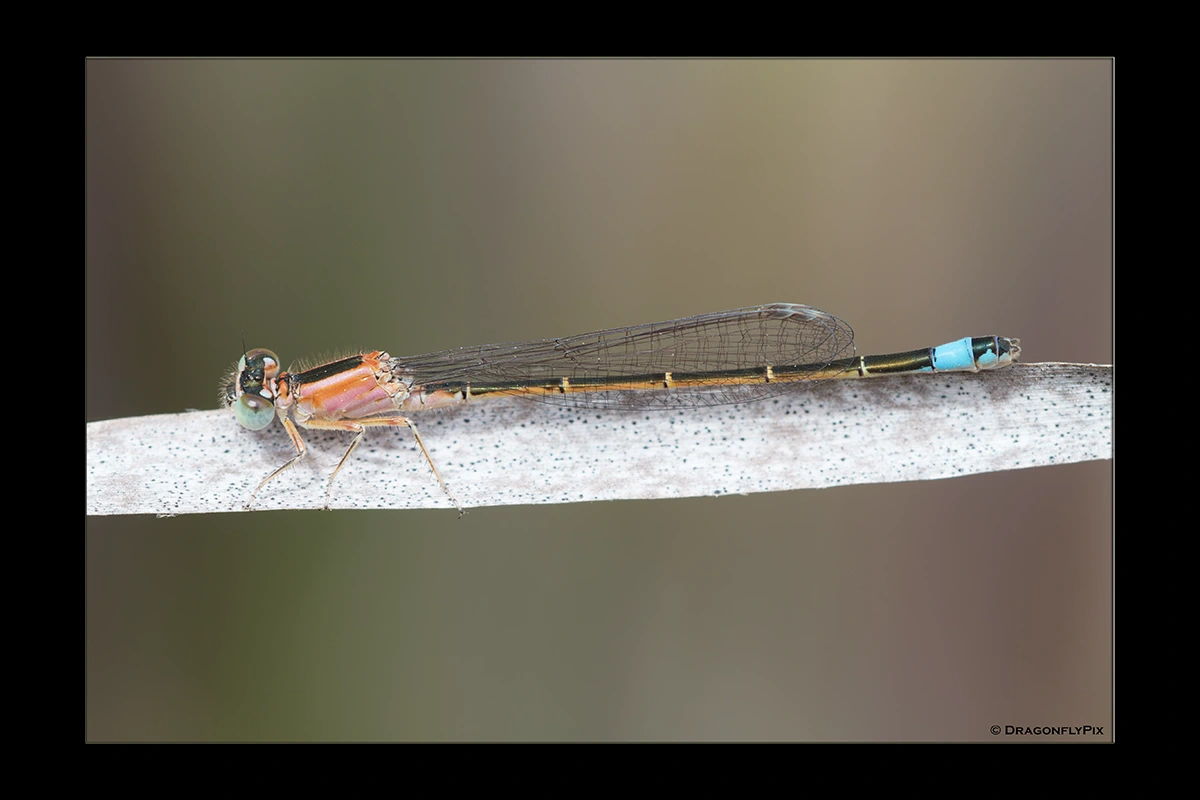
| Female | Thorax | • the side of the thorax is either green (in the form typica), pale lilac (in the form violacea), orange/pink (in the form rufescens), or green-orange-brown (in the forms infuscans and infuscans-obsoleta) |
| • the antehumeral stripe is of the same colour as the side of the thorax (see above) but is absent in the forms rufescens and infuscans-obsoleta | ||
| Abdomen | • the abdomen is black on top, but S8 is sky blue in the forms typica, violacea and rufescens or brown in the forms infuscans and infuscans-obsoleta; this tail-light is usually uninterrupted | |
| • the abdomen has a vulvar spine underneath S8 | ||
| Wings | • the pterostigma is uniformly beige/brown in both wings | |
| Photographs | • nearly all of our photos below were made on the Canary Islands in May-June 2014 |

Males in the elegans group; pronotum
I. elegans (1), I. genei (2), I. graellsii (3), I. saharensis (4)
Note the dark upright projection in I. elegans. It is absent in the other species.

Ischnura saharensis (left) and I. senegalensis (right); thorax, male
Note: in I. saharensis the black line on the interpleural suture is much thicker and longer than in I. senegalensis.

Ischnura saharensis (left) and I. senegalensis (right); abdomen, male
Note: in I. saharensis the green and black portions of S2 are separated in a straight line, without a bulge.

Ischnura saharensis (left) and I. senegalensis (right); abdomen, male
Note: in I. saharensis the tubercle on S10 is much larger than in I. senegalensis.

Ischnura saharensis (left, centre) and I. senegalensis (right); abdomen, female
Note: in I. saharensis S8 is either blue or brown on top; in the gynochrome form of I. senegalensis it is black.